Omaha Weather Is Hard on Ceilings — From Above
A ceiling is the last thing standing between your living room and everything the Nebraska sky throws at your roof. Spring hail bruises shingles; the leak shows up months later as a tan ring over the sofa. A February ice dam backs meltwater under the eaves and into the bedroom corner. August humidity condenses around a poorly insulated bathroom fan duct and freckles the ceiling below with spots. Meanwhile the house itself is moving — trusses lifting in cold snaps, framing shrinking and swelling with the seasons, fasteners slowly working loose after fifty years of furnace cycles.
None of this is exotic, and almost all of it is fixable in a day or two once the source is handled. The order of operations is the part homeowners most often get wrong: fix the water first, then the drywall. Patching under an active leak just schedules the same repair twice.
The Damage We See Most, and What Each Fix Involves
Water stains and rings
Once the roof or plumbing above is verified dry — a moisture meter, not a guess — sound-but-stained drywall needs only stain-blocking primer and paint. Board that's soft, bubbled, or crumbling gets cut back to solid material and patched. Never just repaint a stain without blocking it; the ring bleeds through ordinary paint like a ghost.
Truss uplift cracks
That crack along the top of interior walls that opens every winter and closes in June is the roof truss arching as its cold top chord and warm bottom chord disagree. The durable fix isn't more mud — it's detaching the ceiling drywall edge from the truss near the wall and letting crown-style corner details or floating corners absorb the seasonal movement invisibly.
Nail pops and fastener lines
Decades of expansion cycles push drywall nails proud of the surface in neat little rows. The lasting repair drives a screw beside each pop to re-anchor the board, sets the old nail, and skims both — cosmetic-only fills return within a year or two.
Sagging panels
Plenty of 1960s–70s metro ceilings were hung with 1/2-inch board on framing spaced 24 inches apart — a recipe that droops under decades of gravity, insulation weight, and humidity. Options range from re-screwing into framing to overlaying with new board; genuinely water-damaged sag means replacement of the affected area.
Holes and access cuts
Electricians, plumbers, and HVAC techs open ceilings for good reasons and rarely close them beautifully. Patching the hole is the quick part; blending the patch into surrounding texture so it vanishes is the craft — see texture matching.
Plaster ceilings in older neighborhoods
Dundee, Benson's bungalow blocks, and other pre-war Omaha neighborhoods have lath-and-plaster overhead, not drywall. Cracked or bellied plaster calls for different techniques — adhesive re-anchoring, plaster washers, or careful overlay — and a heavier hand ruins it fast. Say "plaster" when you call and the approach changes accordingly.
How a Repair Visit Goes
Find the cause, not just the symptom
Moisture readings around stains, a look at the attic side where relevant, and honest triage: cosmetic fix, structural re-fastening, or cut-and-replace.
Protect the room
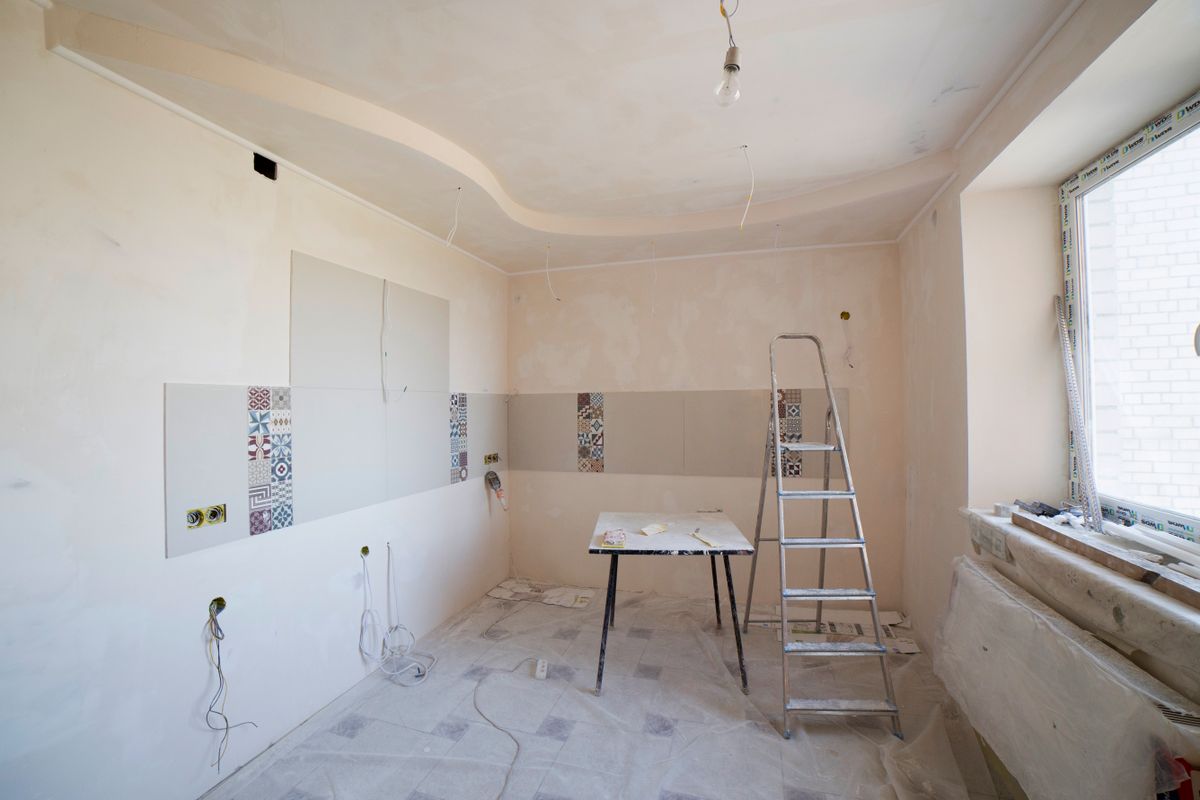
Plastic and drop cloths below the work area — drywall dust is legendary at finding its way into everything, and containment is cheaper than cleaning.
Cut back to sound material
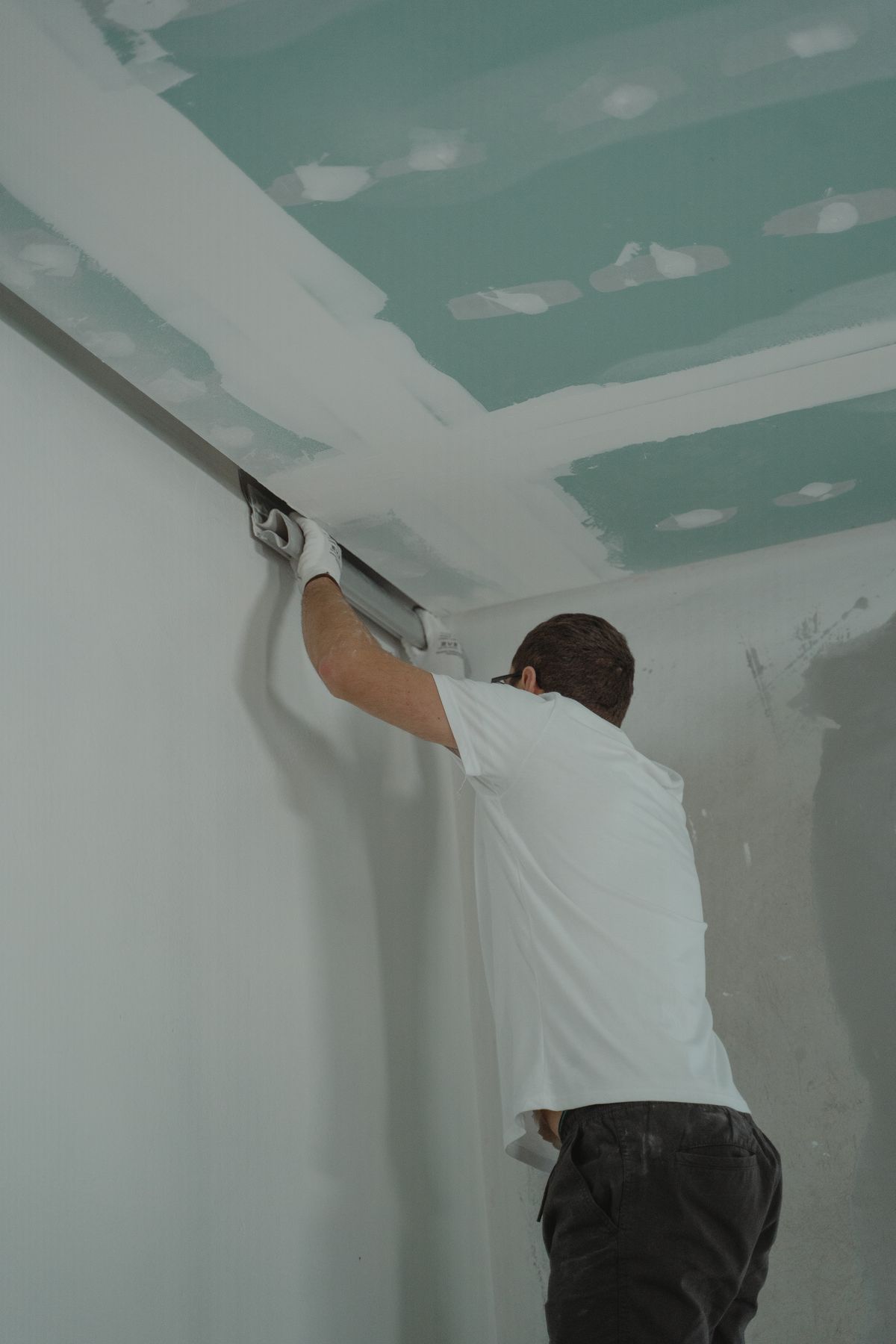
Damaged sections come out to framing or to clean board, new drywall goes in with proper backing, and seams get taped with setting compound.
Feather, texture, and blend
Multiple thin coats feather the patch into the surrounding plane, then the existing texture — knockdown, stomp, orange peel, or smooth — gets matched across it.
Prime and repaint the plane
Stain-blocker over any water history, then paint corner to corner so the sheen is seamless. A patch painted only locally almost always flashes in evening light.
The Attic Side of the Story
Plenty of "ceiling problems" in Omaha are actually attic problems wearing a disguise. Ice dams trace back to warm attic air melting the roof snowpack — which usually means thin insulation or air leaks around ceiling penetrations. Recurring stains around bath fans often mean the duct dumps humid air into the attic, where it condenses all winter and drips back down. Even truss uplift is, at root, an attic-climate phenomenon. A good ceiling pro looks up through the hatch before quoting, because patching the drywall without naming the cause just books a rematch. Where the fix belongs to another trade — insulation, roofing, HVAC — you'll hear that plainly, along with the repair scope for the ceiling itself.
Repair, Overlay, or Replace?
A useful rule of thumb from the trade: when damage is localized — a stain, a crack, a hole, a few pops — repair wins on cost and speed. When the whole ceiling is tired (widespread sag, dozens of pops, failing texture) but structurally attached, an overlay of new 1/4- or 3/8-inch drywall over the old surface delivers an essentially new ceiling without demolition mess — the same encapsulation technique used over positive-testing popcorn. Full replacement is reserved for saturated, moldy, or structurally compromised board, or remodels that open the ceiling anyway. A good quote walks all three with numbers, because the right answer is math, not ideology.
One more Omaha-specific note: if your damage traces to hail or ice dams, your homeowner's insurance may already be involved for the roof. Interior finish repair is commonly part of those claims, and a written repair scope from a professional makes the adjuster conversation far easier. We can't give insurance advice — but we can make sure the ceiling half of your claim is documented properly.
What Ceiling Repairs Cost in the Metro
Small ceiling work is priced by the job, not the square foot, because setup and texture blending dominate the hours. Broad local expectations: sealing and repainting a sound water stain often lands in the low hundreds; cutting out and patching a damaged section with texture match typically runs $300–$900 depending on size and finish; floating-corner truss-uplift details and multi-room fastener repairs are quoted per room; and whole-ceiling overlays price closer to removal-and-refinish territory. Every number firms up in a free written quote — and if the honest answer is "this is a $150 primer-and-paint fix," that's exactly what you'll hear.
Ceiling Repair Questions
Do you find mold under Omaha ceiling stains very often?
Sometimes, particularly under long-running slow leaks and around bathroom fans that vent into the attic instead of outdoors. Small surface mold on drywall that's since dried is manageable within a normal repair; extensive or active growth gets flagged honestly so a remediation specialist can handle it first. Either way you'll know what was found and why the recommendation is what it is.
The stain is dry and old. Can I skip the repair?
If the leak above is genuinely fixed and the board is firm, the "repair" is just primer and paint — quick and inexpensive. Confirm the firmness though: press gently around the stain. Any give, crumbling, or tape lifting means water got into the board and it should be opened up.
Should truss-uplift cracks be fixed in winter or summer?
The floating-corner repair works in any season because it stops fighting the movement instead of trying to freeze it. If you only want the cosmetic re-tape, do it in late winter at maximum uplift so the joint spends the rest of the year in compression rather than tension.
Is a textured patch really going to be invisible?
Blended and fully repainted, yes — findable only if you knew exactly where to look. Patched and spot-painted, no. The full-plane repaint is the difference, and it's why a proper patch quote includes paint for the whole ceiling.
My popcorn ceiling is damaged. Repair it or take it all down?
Damage is often the nudge that makes removal the smart money: you're already testing, containing, and refinishing one area, and extending to the full ceiling erases the dated texture in the same mobilization. Compare both numbers — the gap is usually smaller than expected. Start with the cost guide.
Make the Damage Disappear
Free quotes on ceiling repairs large and small, everywhere in the Omaha metro — with texture matching that actually matches.