Sometimes Paint Is the Whole Answer
Not every dingy ceiling needs a scraper. If your texture is smooth or lightly patterned, firmly attached, and free of damage, a proper repaint alone can pull a room forward twenty years. Ceilings yellow slowly — cooking aerosols, candle soot, a decade of furnace seasons, the nicotine history of a previous owner — and because the change is gradual, most people don't register how far from white their "white" ceiling has drifted until fresh paint goes up next to it. The difference on a gray January afternoon in Omaha, when every usable lumen matters, is genuinely startling.
Painting is also the closing act of every other ceiling service we arrange: popcorn removal ends with paint, new texture must be sealed with paint, and a repair isn't invisible until the whole plane is repainted. This page covers the craft either way — standalone or as stage six.
Why Ceiling Painting Is Its Own Skill
Everything happens overhead
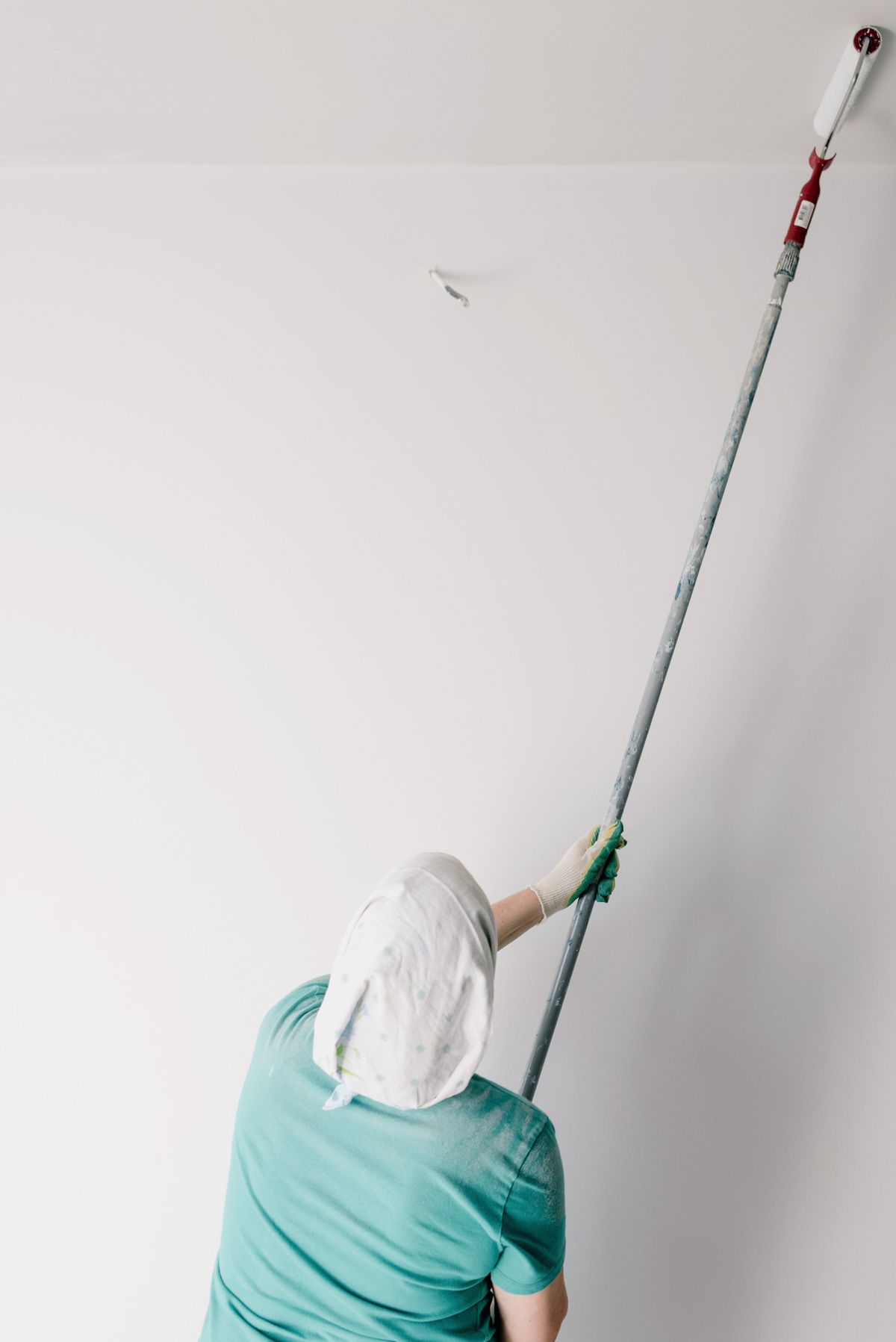
Rolling a surface above your head with a loaded roller is a different sport from painting a wall: control matters more, fatigue arrives faster, and every drip obeys gravity straight onto whatever you didn't cover. Pros work in overlapping rows with the light, keeping a wet edge so lap marks can't set up.
Flat sheen hides; anything shinier tattles
Ceilings get dead-flat paint for a reason: flat scatters light and conceals minor waviness, while eggshell and satin turn the same surface into a raking-light billboard of every roller mark and old repair. Kitchens and baths can justify a washable flat or matte made for humidity — but true gloss belongs on trim, not overhead.
Stains must be blocked, not buried
Water rings, smoke shadow, and marker from a kid's bunk-bed era all bleed through ordinary latex — sometimes after the second coat, just to be cruel. A dedicated stain-blocking primer over the trouble spots first is the difference between painting a ceiling and re-painting it next month.
The cut line makes the room
Where ceiling meets wall color, a wobbling line is visible from the doorway forever. Cutting that junction crisp and straight — freehand with a good brush, no tape ridges — is the ten percent of the job that produces ninety percent of the "wow, that looks professional."
The Professional Sequence
Empty and mask
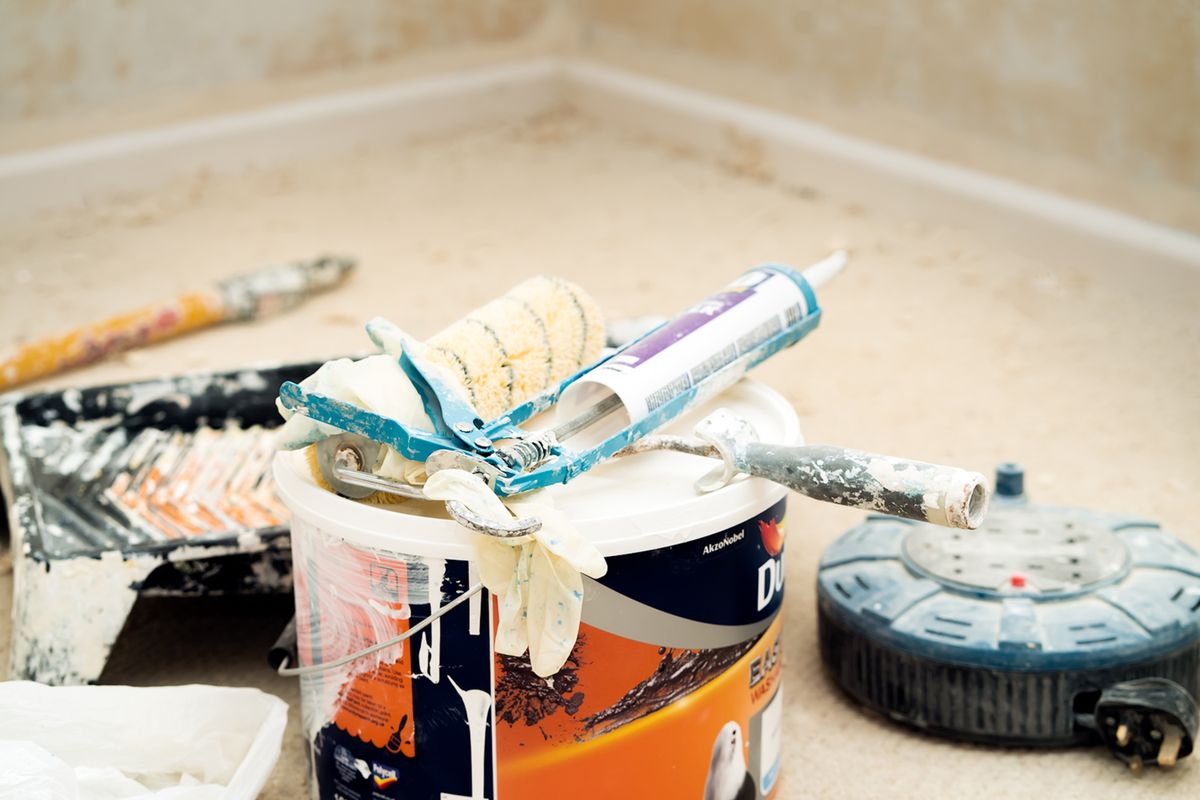
Furniture out or centered under plastic, floors sheeted, fans and fixtures dropped or bagged, walls protected where the cut line will be worked.
Prep the surface
Dust and cobwebs off first — paint glues them down otherwise — then caulk hairline gaps at crown or wall junctions, set any proud fasteners, and spot-skim dings.
Prime with purpose
Stain-blocker over water and smoke history; drywall primer over new compound and patches; a bonding coat over glossy or unknown old surfaces. Skipping primer is where most DIY ceiling jobs quietly fail.
Cut and roll, twice
Brush-cut the perimeter and around fixtures, roll the field before the cut dries, and repeat with a second coat — one coat of even the best flat white rarely covers a yellowed ceiling evenly.
Reset the room
Fixtures rehung, plastic down, floors clean, switch plates back on. A same-day handback for most single rooms.
Please Don't Paint the Popcorn
The most common ceiling-painting mistake in the metro is rolling paint onto acoustic texture. Three problems follow. The roller drags loose texture off in strips mid-coat, which is exactly as demoralizing as it sounds. The paint adds weight to a finish that's already hanging on a fifty-year-old bond. And most costly of all: paint waterproofs the popcorn, so the wet-scrape method stops working — painted texture can raise future removal cost substantially. If your popcorn looks bad enough to paint, that's usually the sign it's ready to come down instead. Compare the numbers in the cost guide before buying a sprayer. (If the texture might predate the 1990s, test it first — even painting disturbs a friable surface more than leaving it alone.)
What Ceiling Painting Costs Locally
Straightforward repaints of smooth or lightly textured ceilings around Omaha generally run $0.75–$2 per square foot for two coats, with single rooms often quoted flat in the $150–$400 range once setup is counted. Stain-blocking, heavy texture (which drinks paint), vaulted heights, and popcorn-adjacent prep push quotes upward; bundling every ceiling on a floor pulls the per-room number down sharply, since masking and mobilization happen once. Ceiling painting folded into a removal or retexturing project is cheaper still — the containment is already up. Vaulted great rooms and two-story foyers are the main exception to all of these numbers: once scaffolding or specialty ladders enter the picture, expect the quote to price the tall spaces as their own line item, clearly labeled, so you can see exactly what the height is costing you.
Five Signs a Ceiling Is Overdue
- The corners give it away. Hold a sheet of printer paper against the ceiling near a wall; if the ceiling reads cream or gray against it, the yellowing has already happened.
- Ghost stripes over the walls. Faint dark bands tracking the framing — "ghosting" — show up where cooler framing lines collect airborne soot over years, common above candles and older furnaces.
- A ring that keeps coming back. Any stain that returns after painting means moisture is still active — that's a repair call first, paint second.
- Sheen patches in evening light. Old touch-ups flash at low sun angles when the sheen or batch didn't match — the fix is a full-plane repaint, not another touch-up.
- Fresh walls, tired lid. Newly painted walls make an untouched ceiling look ten years older by contrast. If the walls are getting done, budget the ceilings in the same pass.
DIY Roller or Professional Crew?
Ceiling painting is the most DIY-approachable service on this site, and we'll say so plainly: a patient homeowner with a quality 3/8-inch-nap roller, an extension pole, and a free Saturday can repaint a smooth bedroom ceiling respectably. Where the pro earns the fee is scale and stakes — stairwells and vaulted spaces that need staging, stain histories that demand the right primer the first time, textured surfaces that shed into cheap rollers, whole-floor projects where masking eats the weekend before painting begins, and any ceiling that will be photographed for a listing next month. A useful test: if the job needs more than a stepladder or more than one room, price the professional version before spending anything at the paint counter. The quote is free, and more than a few callers discover the gap between "my weekend plus materials" and the professional number is thinner than they guessed.
Ceiling Paint Questions
Is ceiling white just white?
There's a family of them. Bright non-yellowing whites maximize reflected light — the usual pick for Omaha's dim winters — while softer warm whites flatter wood trim and traditional rooms. Some homeowners go bolder: a pale tint of the wall color overhead visually raises a low ranch ceiling. Sample boards beat guessing.
Can ceilings be painted in winter?
Yes — interior latex cures fine in a heated Nebraska house. Ventilation is the only planning point: low-VOC paints and an hour of cracked windows or fan exchange handle it. Winter is often the fastest season to get on the schedule.
How long until the room is livable?
Modern flat ceiling paints are dry to the touch in a couple of hours; a room painted in the morning is normally back in service that evening. Full cure takes days-to-weeks, but nothing touches a ceiling, so it doesn't matter the way wall or trim cure does.
Do bathroom and kitchen ceilings need special paint?
They benefit from it. Steam and cooking film are rough on standard flat paint, so moisture-resistant matte formulations made for kitchens and baths hold up and wipe clean far better. Pair it with a working exhaust fan — paint can't outlast a ceiling that's rained on from the inside every shower.
A Brighter Ceiling by This Weekend
Free quotes on ceiling painting — one stained bedroom or every ceiling in the house — anywhere in the Omaha metro.